
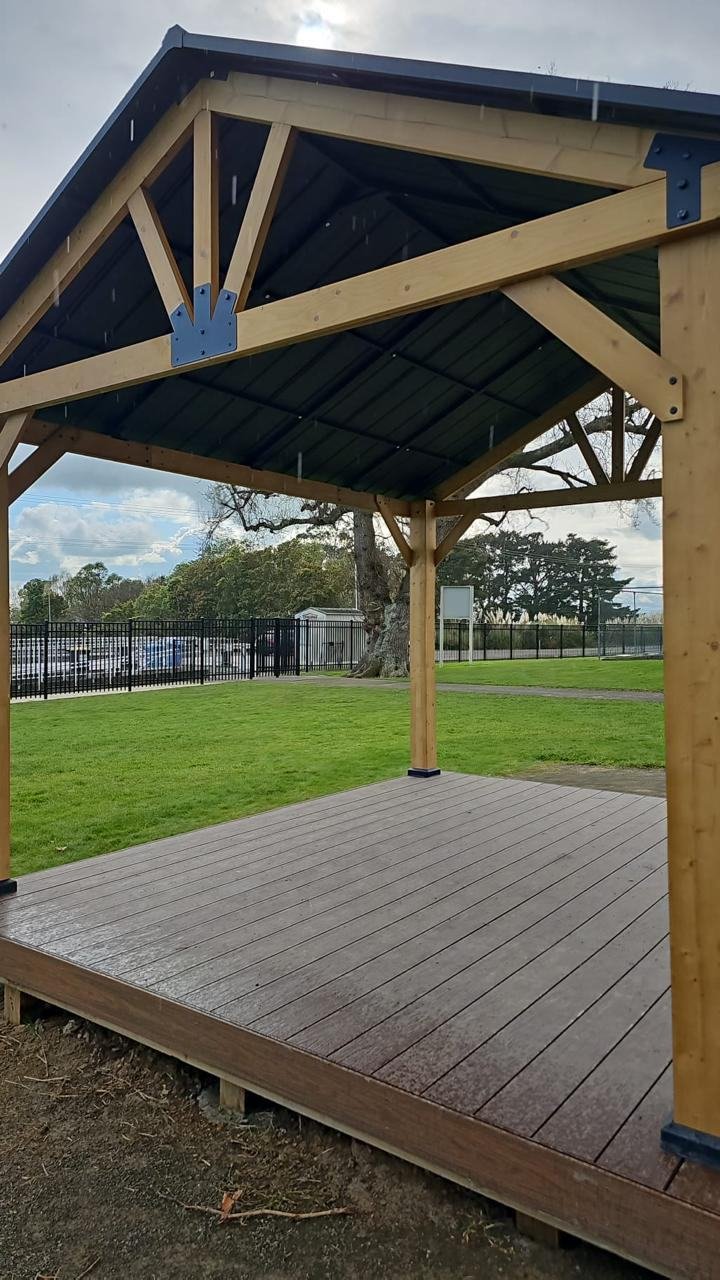
A spa gets used far more when it has a roof over it. Rain, wind, falling leaves and the midday sun are the main reasons people stop using an uncovered spa. A well-designed cover turns it into a year-round part of the house. Here is what to think about before you build.
Choose the right type of roof
- Metal pergola. A steel frame with a solid corrugated metal roof gives complete shade and rain cover. It can be freestanding over a spa or attached to the house, and it is built to your measurements rather than a fixed kit size.
- Opening louvre roof. Motorised blades open to the stars on a clear night and close flat against rain. They also let steam escape when open. Integrated LED lighting is available, and outdoor electrical components are rated IP67.
- Elite Canopy. A fixed polycarbonate roof that keeps the rain off while letting through 25% to 88% of the light depending on tint, so the area stays bright.
Think about steam and airflow
A hot spa produces a lot of steam and moisture. A cover should let that moisture escape rather than trapping it.
- Keep at least one or two sides open, or use blinds that can be rolled up.
- An opening louvre roof can be partly opened to vent steam while still keeping light rain off.
- Avoid fully enclosing a spa unless the space is designed with ventilation in mind.
Plan for privacy and wind
Spas are often in view of neighbours or exposed to the wind. Outdoor blinds on one or two sides give privacy and block wind when you want them, and roll away when you do not. Fixed panels give permanent shelter on the windy side. Fencing adds privacy at the boundary.
Check the structure under the spa
A filled spa is very heavy. If it sits on a deck, the deck must be designed to carry that load - many standard decks are not. If you are adding a spa to an existing deck, have the structure checked. The roof posts usually need their own footings rather than sitting on the deck boards.
Plan the power early
Spas, louvre motors and lighting all need power. Plan cable routes before the build so you are not adding conduit afterwards, and use a registered electrician for all the electrical work.
Know the safety rules
In New Zealand, pools and spas must be safely restricted for young children. A small heated pool such as a spa can usually meet this with a lockable cover instead of a fence, provided it meets the specific requirements. A roof over the spa does not replace that cover. Check the current rules on building.govt.nz or with your council.
Building consent for the cover
Schedule 1 of the Building Act 2004 exempts an open, unroofed pergola from building consent. A roofed cover has to fit the awning or carport size limits to be exempt; otherwise it needs consent. District plan boundary rules can also apply. Our consent guides by council explain the rules, and we check what applies before work is booked.
Leaves and maintenance
A roof keeps most leaves out of the water, which means less cleaning and less strain on the filter. Keep the roof's own gutters clear so water drains away from the spa rather than onto it.
Strength and warranty
Choose a structure rated for your conditions. Our opening louvre roofs are rated for winds up to 200 km/h and Elite Canopies for 160 km/h, both with a 10-year structural warranty. Our metal pergolas carry a structural warranty too - ask us for the current terms.
Our recommendation
For year-round use with good airflow, an opening louvre roof is hard to beat. For complete shade and rain cover at a simpler level, a metal pergola works well. Add blinds on the exposed or overlooked side, and plan the deck and power from the start.
Explore Metal Pergolas Explore Opening Louvres Get a free onsite quote