
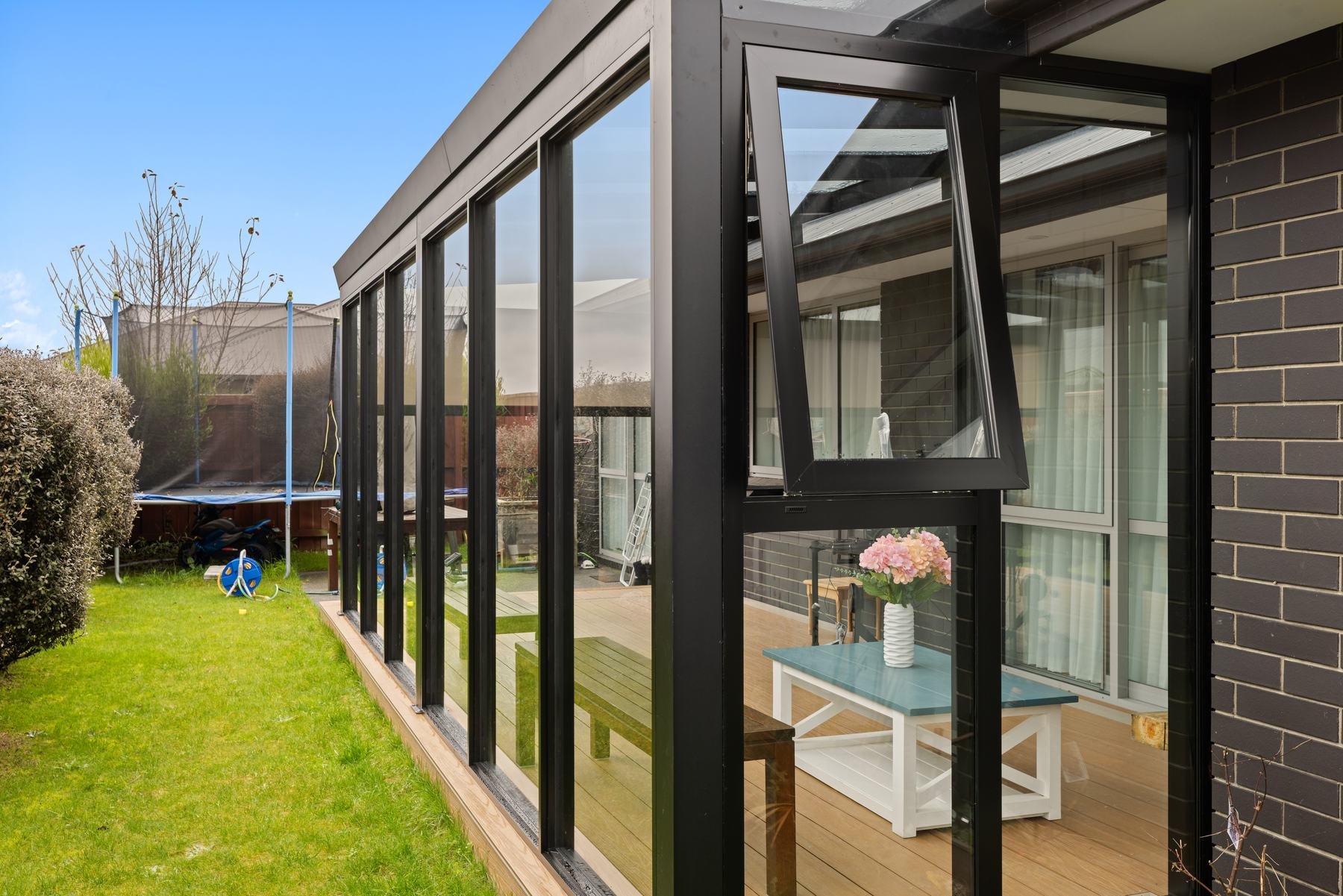
A sunroom is the one outdoor-living option that isn't really "outdoor" at all — it's a fully enclosed, glazed room that works as real usable indoor space in any season. Here's how it actually compares to an open canopy or louvre roof, and what to check before you buy one.
Enclosed, not just covered
Where a canopy or louvre roof covers a space but leaves the sides open, a sunroom is glazed on the sides too — full walls of glass or glazed panels, not just a roof. That means it works as an all-weather room you can actually heat, sit in through winter, and use as real floor area, not just sheltered outdoor seating.
Glazing: the spec that actually determines the outcome
The glazing quality is what makes or breaks a sunroom's comfort. Ask specifically about:
- UV and thermal rating of the glass or polycarbonate glazing used.
- Seal quality around panels and doors - poor seals mean draughts in winter and heat loss regardless of the glazing itself.
- Frame material - aluminium resists corrosion far better than steel, especially in coastal areas, which covers most of New Zealand.
Does a sunroom actually improve energy efficiency?
Honestly, it depends entirely on the glazing spec. A well-glazed sunroom can act as a buffer zone that reduces heat loss from the adjoining part of the house. A poorly glazed one can do the opposite - overheating in summer and losing heat fast in winter. The glazing spec is what actually determines the outcome, not the fact that it's called a sunroom - don't take "energy efficient" as a given without asking what's actually installed.
Building consent: more likely than for an open pergola
A fully enclosed structure like a sunroom is more likely to need consent than an open, unroofed pergola, because it's treated as a genuine addition to the home rather than an outdoor shade structure. Confirm with your council or a building professional before committing to a design - see our buyer guide for more on this.
What people actually use a sunroom for
- A year-round living or dining room extension.
- A home office that feels separate from the main house.
- Extra guest or hobby space that doesn't require a full home extension consent process.
What it costs
Sunroom pricing varies more than a standard canopy because it's driven by glazing type, size and how much of the perimeter is enclosed - there isn't a single per-m² number that fits every job the way there is for a fixed canopy. The most reliable way to get a real number is to run your dimensions through our price calculator or get a free onsite quote.
Winterising a sunroom: a practical checklist
The whole point of a sunroom over an open canopy is that it works as real living space in any season - but a few things make winter more comfortable:
- Check seals around glazing and doors for draughts before the cold sets in.
- Confirm your heating source (if any) actually suits the room's size.
- Clean gutters and check for any water pooling against the glazing.
Sunroom vs canopy vs louvre roof
If you want a genuine extra room you can use year-round regardless of weather, a sunroom is the right category. If you mainly want sheltered outdoor entertaining space rather than an enclosed room, a fixed canopy or opening louvre roof is usually the better fit - and costs less. See our full canopy vs louvre roof comparison if that's the choice you're weighing.
Warranty
Get the structural and glazing warranty periods in writing, not just a verbal assurance. Impact Outdoors backs its sunroom installations with a 5-year roof warranty and 10-year structural warranty, the same as our other systems.
Get a real quote
Impact Outdoors installs sunrooms across Auckland, Wellington, Christchurch, Tauranga and Dunedin. Get a free onsite quote to see what a sunroom would actually cost for your space.