
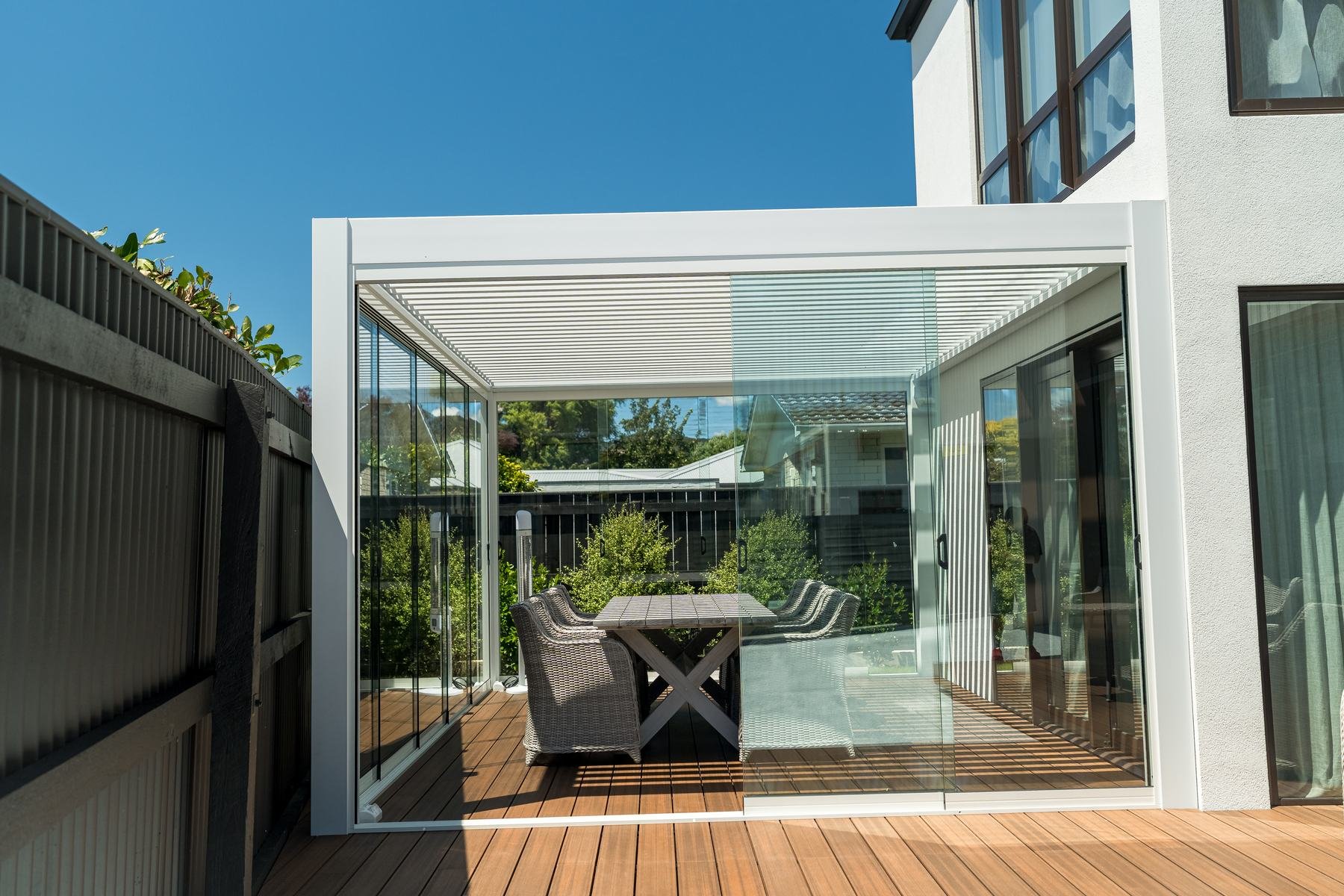
One of the most common questions we hear before someone buys an opening louvre roof is how much looking after it needs. The honest answer: not much. An aluminium louvre roof does not need painting, staining or sealing like timber. But a few simple habits keep the blades moving smoothly, the water draining properly and the finish looking new.
Why aluminium is low-maintenance
Our opening louvre roofs are made from best-in-class aluminium with a powder-coated finish. Aluminium does not rot, warp or split, and the powder coat protects it from the weather. That is why the structure carries a 10-year structural warranty. Maintenance is about keeping it clean and clear, not about protecting the material from decay.
1. Keep the drainage clear
This is the most important job. When the blades are closed, rain runs along them into gutters and down concealed channels inside the posts. If leaves, pine needles or debris build up in the gutters or outlets, water can back up and overflow.
- Check the gutters and outlets a few times a year, and after storms.
- Check more often if you have trees nearby, especially in autumn.
- Make sure the outlets at the bottom of the posts are not blocked by garden beds, mulch or furniture.
2. Clean the blades and frame
Dust, pollen and bird droppings build up on the blades over time. Washing them a few times a year keeps the finish looking good.
- Rinse with fresh water from a hose and use a soft brush or cloth with mild soapy water for stubborn marks.
- Avoid abrasive pads, harsh solvents and strong chemical cleaners, which can damage the powder coat. Using the wrong cleaning products is a common warranty exclusion, so check before using anything other than mild soap and water.
- Do not use a high-pressure water blaster directly on seals, motors or electrical components.
3. Rinse more often near the coast
Salt air settles on every outdoor surface. If you live near the sea, rinse the blades and frame with fresh water more often to stop salt building up on the finish.
4. Look after the motor and electrics
On an automatic roof, a motor adjusts the blades by remote control. The outdoor electrical components are rated IP67, which means they are sealed against dust and water. You do not need to service the motor yourself, but you should:
- Open and close the roof regularly, even in winter, so the mechanism keeps moving freely.
- Keep the rain sensor clear of leaves and debris so it can close the roof when it starts to rain.
- Listen for unusual noises or uneven movement and report them early rather than forcing the blades.
- Leave any electrical work to a registered electrician.
5. Use it sensibly in extreme weather
Our opening louvre roofs are rated for winds up to 200 km/h and up to 80 cm of snow loading. Even so, closing the blades flat before a big storm is good practice. In heavy snow, clearing a build-up early is better than letting it sit.
6. Check it once a year
Once a year, have a quick look over the whole structure: fixings, seals, the condition of the finish, how the blades close, and whether the posts drain properly. Catching a small issue early is easier than fixing a bigger one later.
How it compares with other roofs
A fixed canopy needs similar care - clear gutters and a wash now and then - but has no moving parts. A timber pergola needs regular staining or painting. A louvre roof sits close to a fixed canopy for effort, with the bonus of adjustable sun and shade.
Keep your paperwork
Keep your quote, invoice and warranty details together. If something needs attention, photograph it when you first notice it and contact us promptly, since some warranty terms have a reporting window.
Manual vs automatic louvre roofs Explore Opening Louvres Get a free onsite quote