
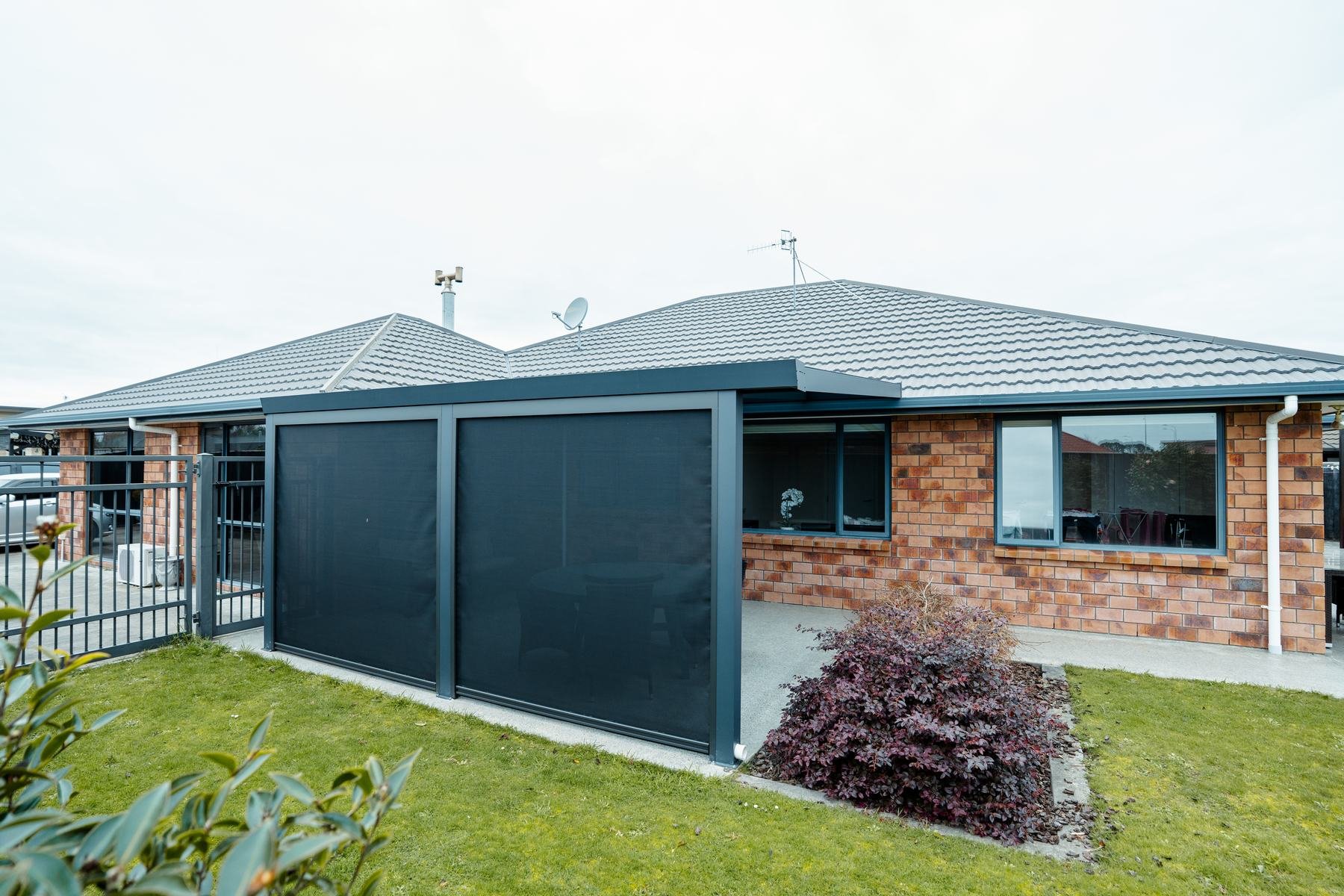
Outdoor blinds are one of the cheapest ways to make a covered deck or patio usable year-round — but "outdoor blinds" covers a wide range of products at genuinely different price points and specs. Here's what actually matters before you buy.
What outdoor blinds actually do (and don't)
Outdoor blinds block wind, low sun and rain drift from the side of an already-covered space. They're not a roof replacement — if you don't have a roof at all yet, you need a fixed canopy or opening louvre roof first. Blinds solve a different, narrower problem: making an already-covered space comfortable in wind and low-angle sun.
Manual vs automatic
Manual outdoor blinds are the simpler, cheaper option — you crank or pull them down by hand, and there's nothing to wire or service. In New Zealand, manual blinds typically run around $250 per m² excl. GST. Automatic (motorised) blinds add remote or app control and cost more, typically around $300 per m² excl. GST — worth it if you're covering a wide opening you'll open and close often, less so for a blind you set once per season.
What the fabric or material actually needs to do
A good outdoor blind needs to hold up to direct sun, wind and rain without fading, stretching or tearing within a year or two. Ask specifically about:
- UV resistance of the fabric or PVC - not just "durable," which every supplier says regardless of the actual spec.
- Wind rating - how the blind performs (and whether it needs retracting) in strong wind.
- Track and guide system - a well-designed track keeps the blind running straight and reduces wear at the edges.
Do outdoor blinds actually stop rain?
They reduce rain drift coming in at an angle under a roof, but a blind isn't a waterproof wall - direct, heavy rain hitting the blind itself can still get through gaps depending on the system. If full weatherproofing on that side is the priority, a fixed glass panel is a better fit than a blind.
Installation and how they attach
Outdoor blinds mount into the existing structure's frame — the fixing points and track alignment matter for how smoothly the blind operates over time, which is part of why this is worth having installed by whoever built (or is familiar with) the existing canopy or louvre roof.
Cleaning and care
- Hose down fabric or PVC blinds every few months to stop grime building up and abrading the surface.
- Check tracks and guides for automatic blinds stay clear of debris.
- Retract fully during severe storms if the system isn't rated to stay extended in high wind.
Where blinds make sense vs where they don't
Blinds are best suited to a space that's already covered - under an existing roofline, veranda or canopy - where you mainly need to block wind, low sun or rain drift from the side. They're the wrong product if you're starting from an open, uncovered space, or if you want full enclosure rather than adjustable shielding.
Warranty
Get the warranty period in writing before you buy, the same as any other system - Impact Outdoors backs its installations with a 5-year roof warranty and 10-year structural warranty across its product range.
Get a real comparison
Impact Outdoors installs both manual and automatic outdoor blinds across Auckland, Wellington, Christchurch, Tauranga and Dunedin. Try our price calculator for an instant estimate on your dimensions, or get a free onsite quote.