
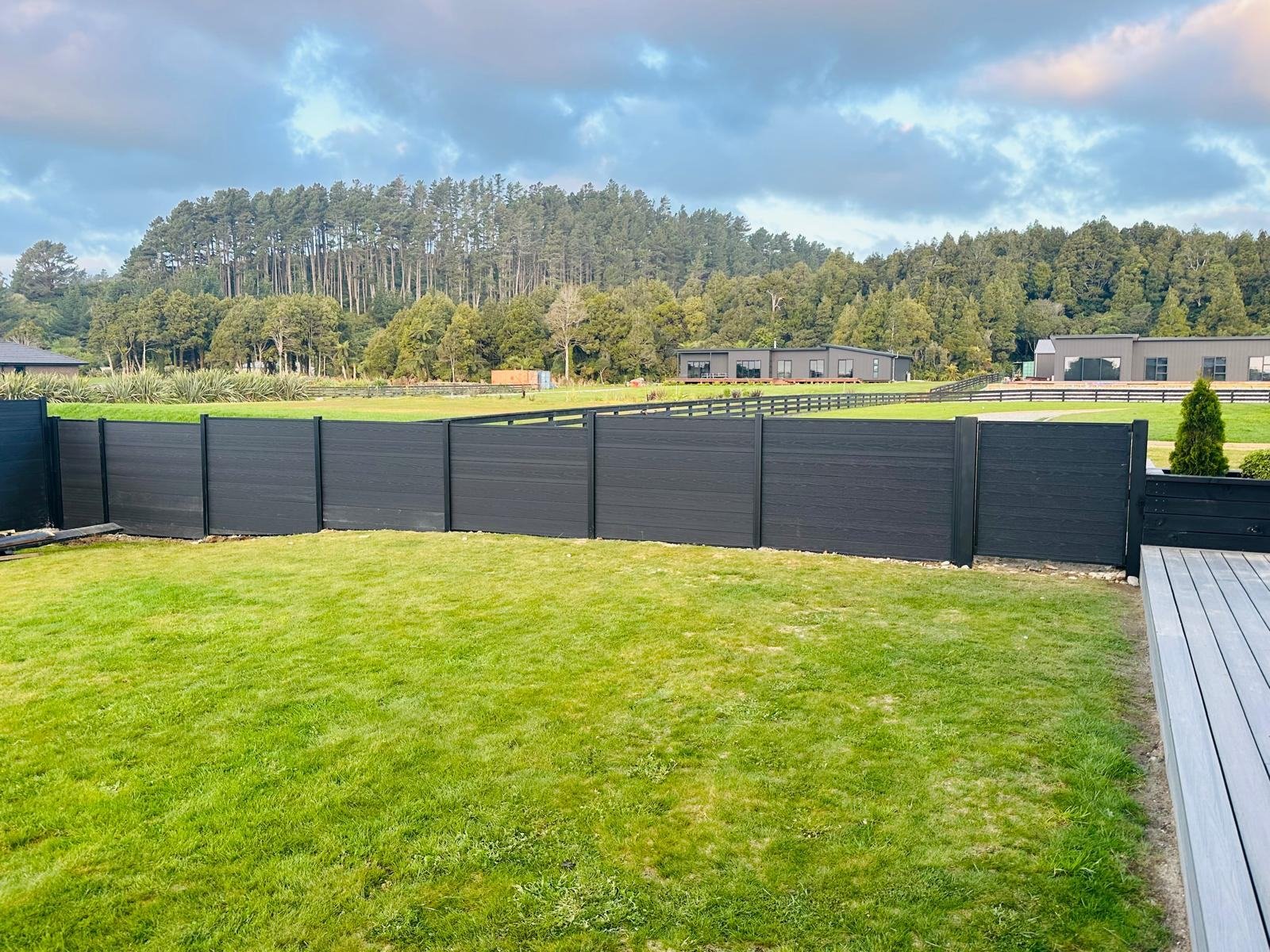
WPC (wood-plastic composite) and PVC are the two most common low-maintenance fencing materials in New Zealand, and they're genuinely often confused for each other. Neither is aluminium or timber - understanding the real difference between these two composite materials is the first step to picking the right one.
The real material difference
WPC blends wood fibre with plastic, giving a more timber-like grain and appearance while resisting rot far better than real timber. It typically runs around $400 per m² excl. GST. PVC is fully synthetic - no wood content at all - which makes it slightly cheaper, around $250 per m² excl. GST, and it tends to resist moisture and colour fading marginally better over time since there's no organic material to break down.
Which to choose
If matching a timber aesthetic matters to you, WPC is the closer visual match at a higher price point. If minimising both cost and long-term upkeep is the priority over appearance, PVC is usually the better fit.
What actually determines fencing durability
The material is only part of the picture - how the fence is built matters just as much:
- Post spacing. Closer post spacing generally holds up better in wind over the fence's lifetime.
- Footing depth. How deep and how the posts are set determines long-term stability, especially in softer or wetter ground.
- Wind exposure. An exposed boundary (coastal, hilltop, open section) needs sturdier construction than a sheltered one - ask your installer how they account for this.
Gates: what to check separately from the fence panels
Gate hardware wears faster than fence panels because it moves. Ask specifically about the hinge and latch hardware quality - this is often where a cheap fencing quote cuts corners that aren't visible until the gate starts sagging.
Building consent for fencing
Fence height and other factors can affect whether consent is required, and rules can vary by council and by the fence's location relative to boundaries and road corners. Confirm directly with your council before committing to a height or design - don't assume based on what a neighbour did without checking.
Maintaining WPC and PVC fencing
Both materials are designed to be low-maintenance compared to timber, but neither is entirely maintenance-free:
- Rinse off dirt and grime periodically, particularly near the coast where salt residue can build up on the surface.
- Check gate hinges and latches yearly for wear.
- Inspect posts and footings after any major storm.
Which lasts longer, WPC or PVC?
Both are built for long service life with minimal upkeep. PVC tends to resist moisture and UV fading marginally better since it has no organic wood content; WPC's timber-like finish can be preferred for appearance even if it needs slightly more attention to keep looking its best over many years. Neither will rot the way untreated timber does.
Warranty
Get the warranty period in writing before you commit, regardless of which material you choose - Impact Outdoors backs its fencing installations the same way as every other system it installs.
Get a real quote
Impact Outdoors installs both WPC and PVC fencing and gates across Auckland, Wellington, Christchurch, Tauranga and Dunedin. Explore Fencing & Gates, or get a free onsite quote for your property.